It is not only blackwork
A gothic tattoo can be bold and dark, but it can also be fine line, ornamental, airy or floral.
Journal / Seattle Gothic Tattooing
A practical guide to gothic tattoo design, placement, scale, aging and style directions.
FINE LINE · ARCHITECTURAL · ORNAMENTAL — NIKA OSSEILI
Article guide
Gothic tattooing is a visual direction rather than one strict formula. A gothic tattoo can be architectural, ornamental, botanical, religious, symbolic, romantic, surreal or severe depending on the references and the way they are drawn.
The common thread is mood and structure: pointed silhouettes, elongated shapes, decorative detail, black contrast and a sense of drama. The best gothic tattoos do not simply copy gothic imagery; they translate it into a composition that fits the body.
Nika Osseili's gothic work often uses fine line structure, open skin and selective black so the tattoo can feel detailed, refined and wearable.
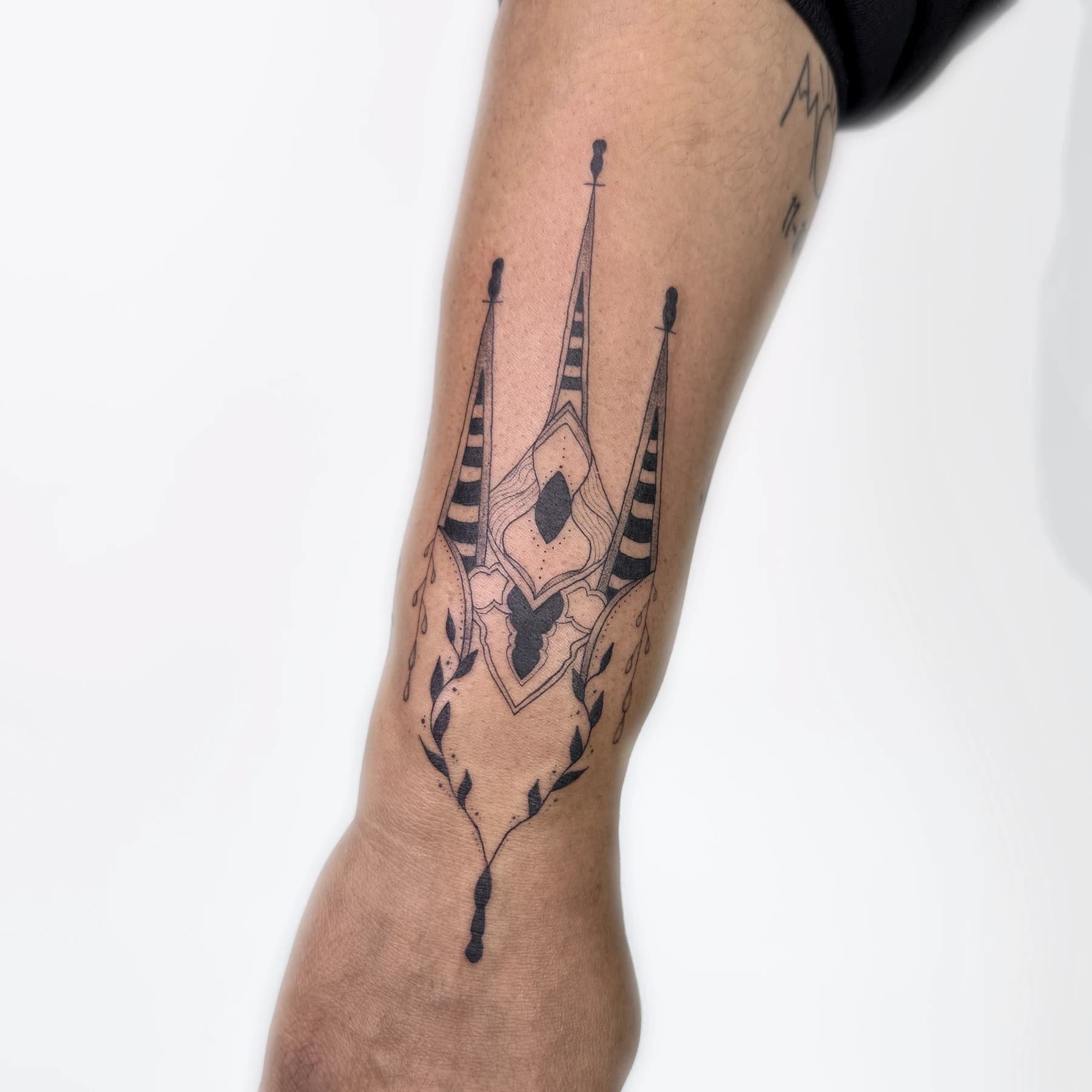
Architectural example
A gothic tattoo can be bold and dark, but it can also be fine line, ornamental, airy or floral.
Strong gothic designs usually have one clear focal point with supporting details around it.
The body area changes the shape, density and direction of the final composition.
Style guide
These categories help clarify the mood of a project before booking. Most custom gothic tattoos combine more than one direction, especially when architecture, ornament, florals and symbolism are built into one composition.
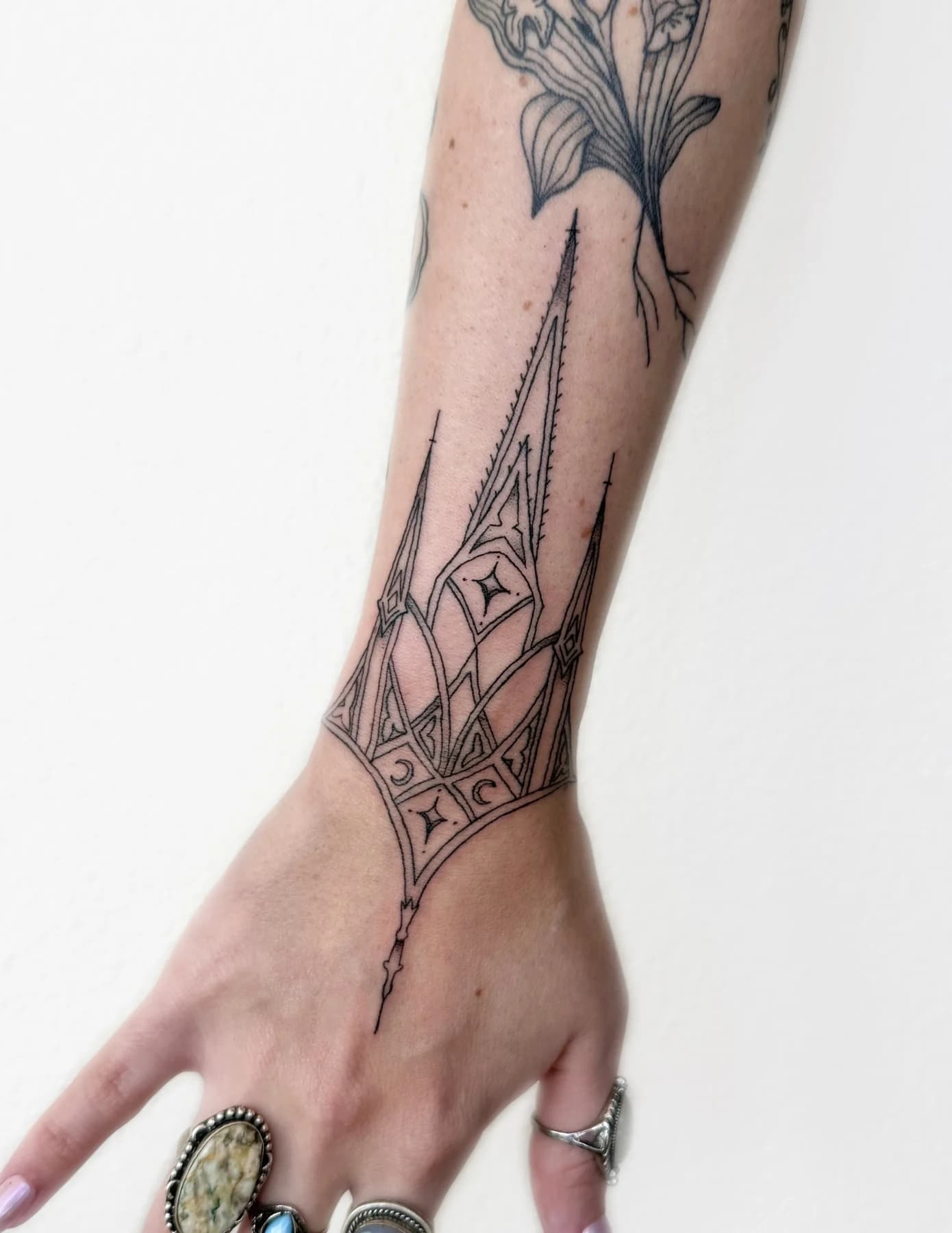
Arches / spires / cathedral structure
This direction borrows from cathedrals, tracery, pointed arches, windows and vertical architecture. It works best when the tattoo has enough length for the structure to feel elegant instead of compressed.
Often works for
spine / forearm / sternum / thigh
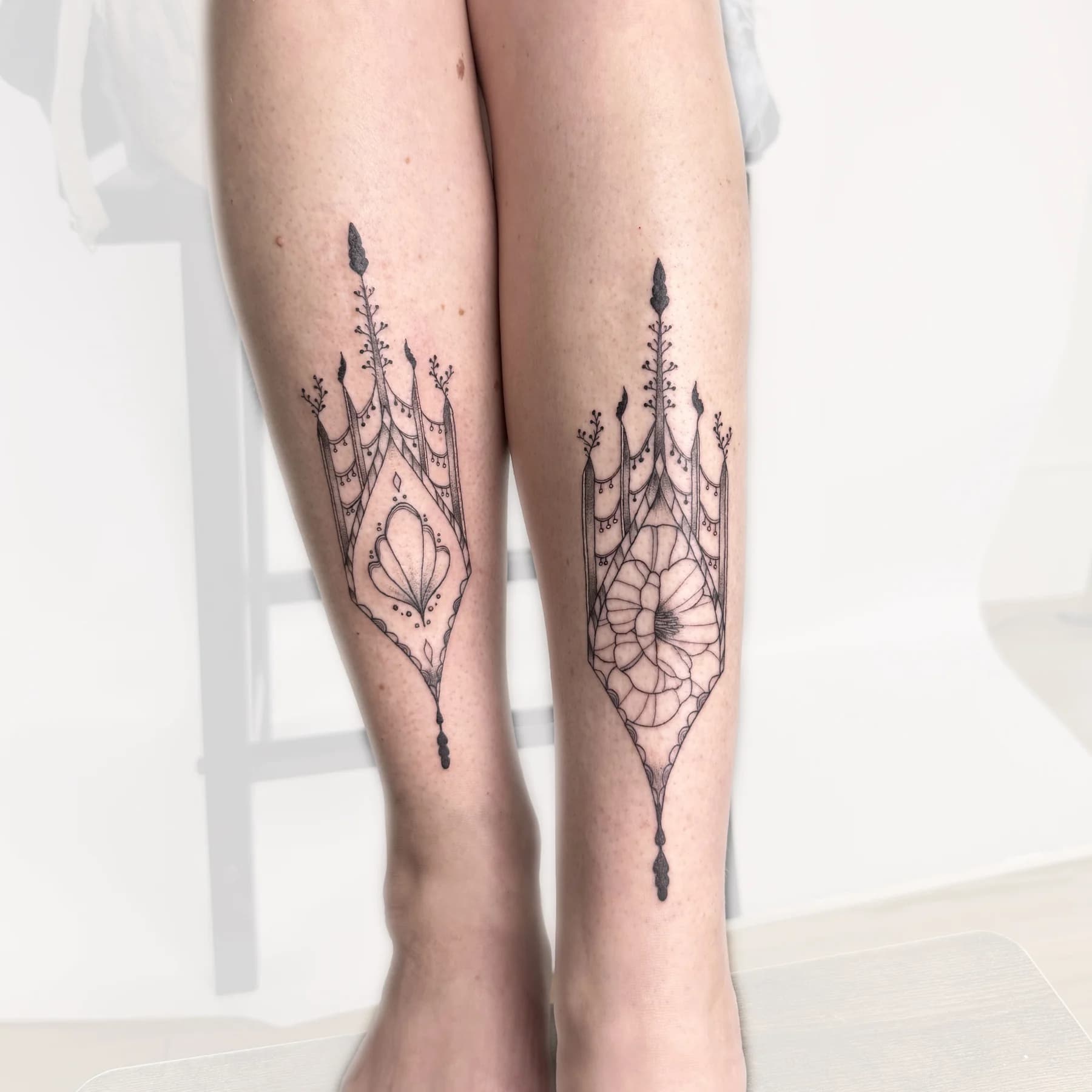
Filigree / chains / framing
Ornamental gothic tattoos use decorative borders, jewelry-like drops, symmetry and fine detail. They can frame a body part beautifully and often pair well with architectural or botanical elements.
Often works for
sternum / ankles / ribs / upper back
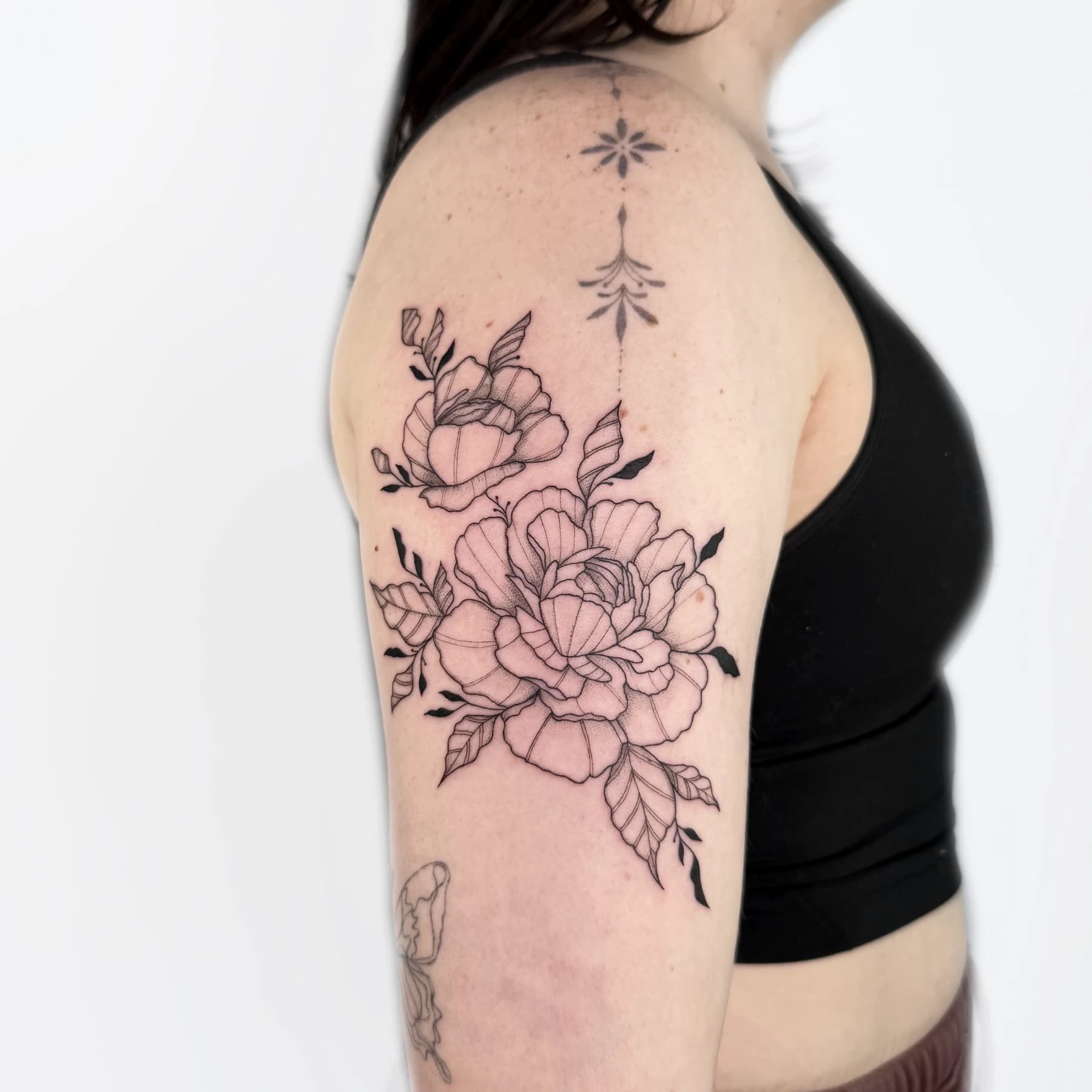
Florals / thorns / organic flow
Botanical gothic work keeps the romance of flowers while adding darker leaves, sharpened silhouettes, black accents or ornamental structure. It is useful when a client wants something gothic but still soft.
Often works for
shoulder / neck / ribs / forearm
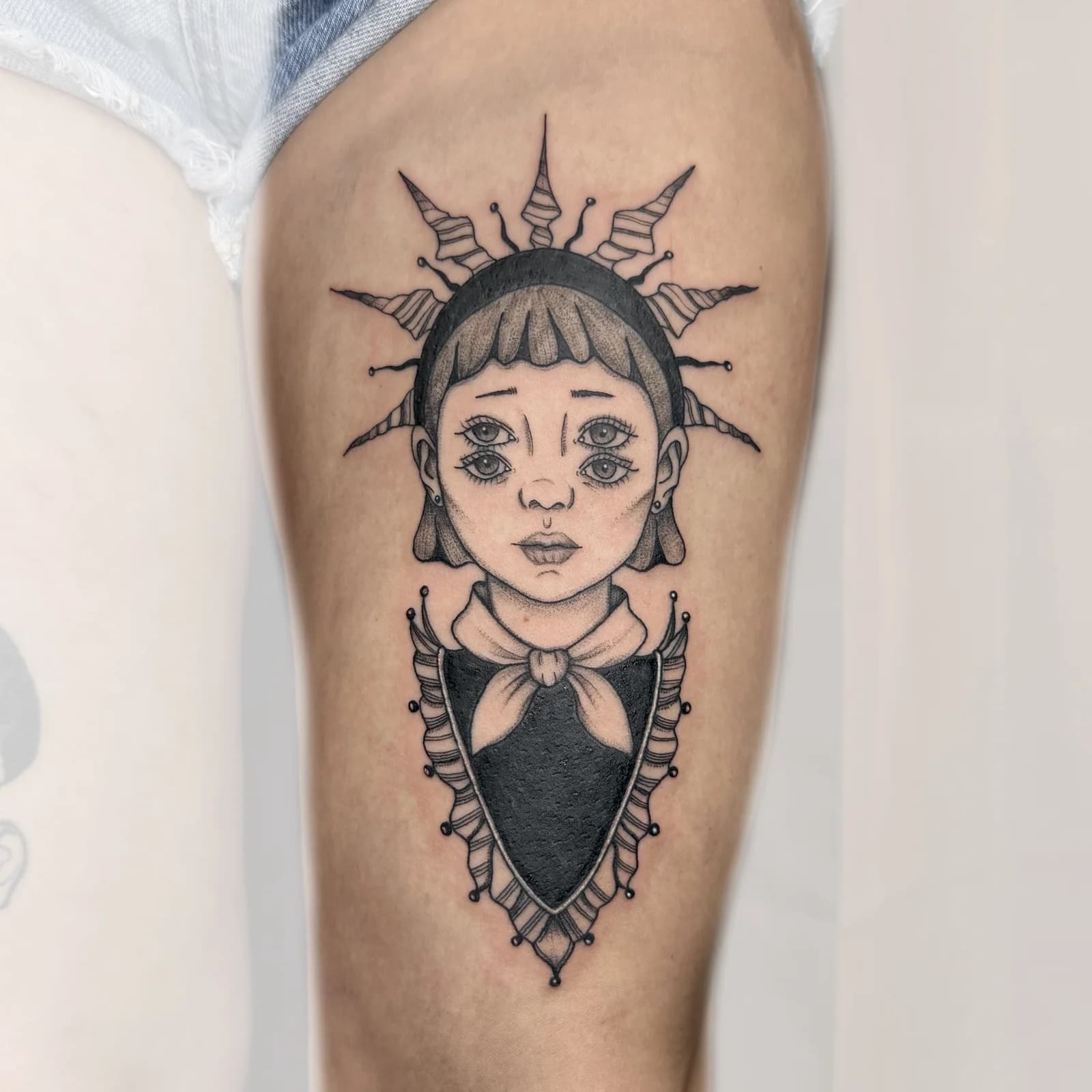
Faces / symbols / dreamlike imagery
Portrait and surreal gothic tattoos can feel theatrical, symbolic or mythic. Crowns, masks, eyes, skulls and ornamental framing help turn a figure into a darker visual story rather than a literal portrait.
Often works for
thigh / upper arm / back / calf
Design vocabulary
A strong gothic tattoo does not need every gothic reference at once. The design usually becomes stronger when the elements are selected carefully and given a clear role.
01
Cathedral / medieval architecture: Spires, windows, vaults, tracery and shrine-like silhouettes.
Pointed arches: Recognizable gothic shape language that helps guide the eye upward.
Elongated forms: Long vertical shapes feel elegant, severe and body-conscious.
02
Ornamental framing: Chains, pendants, filigree and borders can feel like wearable jewelry.
Black contrast: Solid black or dense shading can anchor the composition with intention.
Negative space: Open skin gives detail room to breathe and stay readable over time.
03
Symbolic imagery: Eyes, moons, crosses, relics, crowns, swords and sacred references add mood.
Florals and thorny botanicals: Flowers soften the piece; thorns, dark leaves and pointed petals keep it gothic.
Portraiture and surreal imagery: Faces, masks and dreamlike figures feel cinematic and personal.
01
A strong source for gothic structure: spires, windows, vaults, tracery and shrine-like silhouettes.
02
Arches create the instantly recognizable gothic shape language and help guide the eye upward.
03
Long vertical shapes make gothic tattoos feel elegant, severe and body-conscious.
04
Chains, pendants, filigree and border details can make a tattoo feel like wearable jewelry.
05
Solid black or dense shading can anchor the composition, but it should be used with intention.
06
Eyes, moons, crosses, relics, crowns, swords and sacred references can add meaning and mood.
07
Flowers soften the piece, while thorns, dark leaves and pointed petals keep the tone gothic.
08
Open skin gives detailed work room to breathe and helps the design stay readable over time.
09
Faces, masks and dreamlike figures can make gothic tattoos feel cinematic and personal.
Placement
Placement changes the design before the drawing is finalized. A spine piece can be long and vertical, a sternum tattoo usually needs centered tapering, and a thigh or back piece can hold more layered detail.
Think of placement as the frame for the tattoo. The right area gives the composition enough room to follow anatomy, keep its focal point clear and avoid crowding.
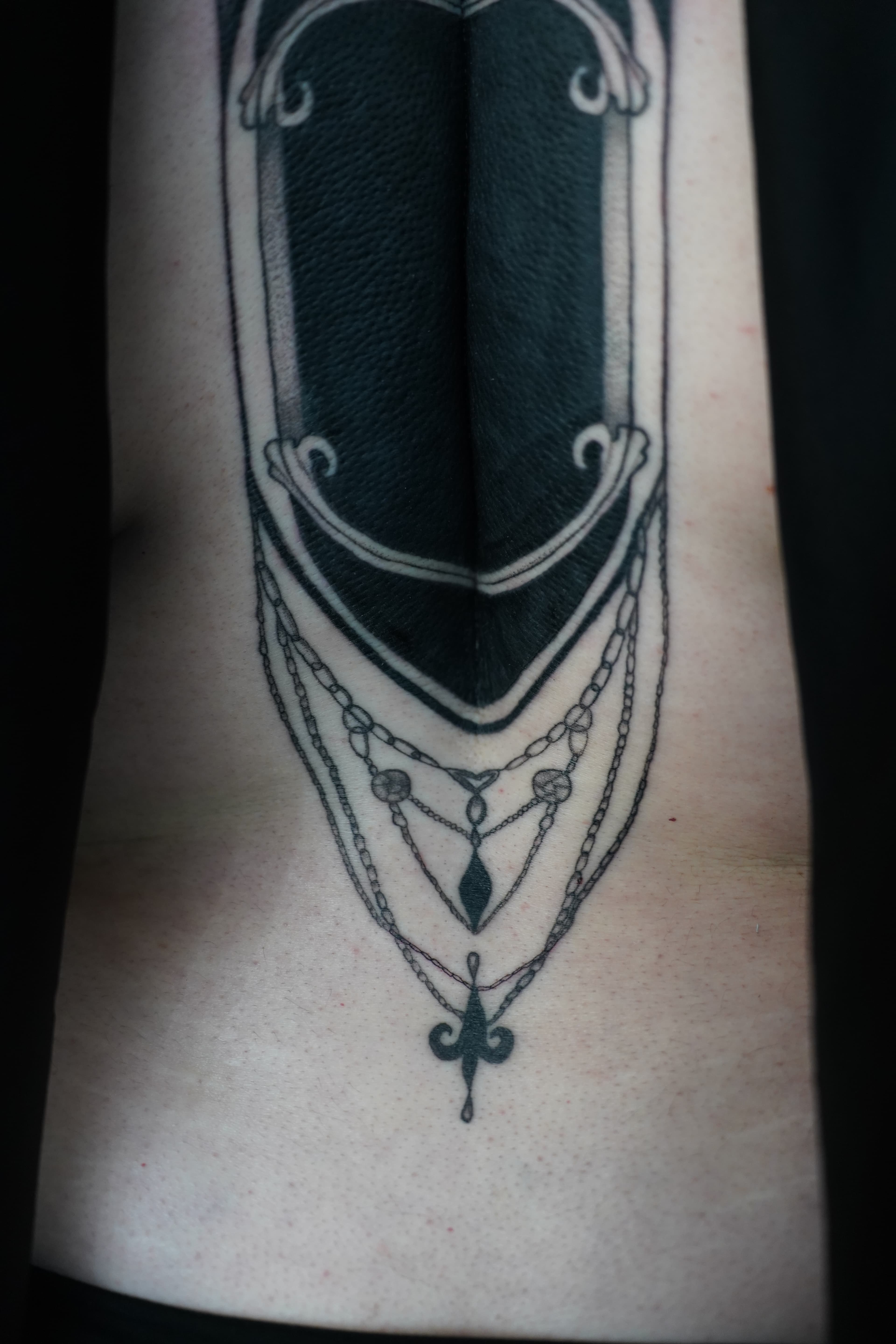
Close detail example
Size and detail
Gothic tattoos often include a lot of tiny information: windows, spires, chains, facial features, petals, black fills and narrow transitions. The more information a design contains, the more space it usually needs.
Bigger does not automatically mean heavier. A larger tattoo can let the design breathe, which often makes fine line gothic work feel more refined and less crowded.
Detail needs distance. If several important details would sit too close together, the design should either get larger or be simplified.
Tiny windows, dense chains, extra symbols, small facial detail and overly layered frames are usually the first things to simplify at smaller sizes.
More detail needs more space. A larger tattoo can often feel lighter and clearer because the composition has more room to breathe.
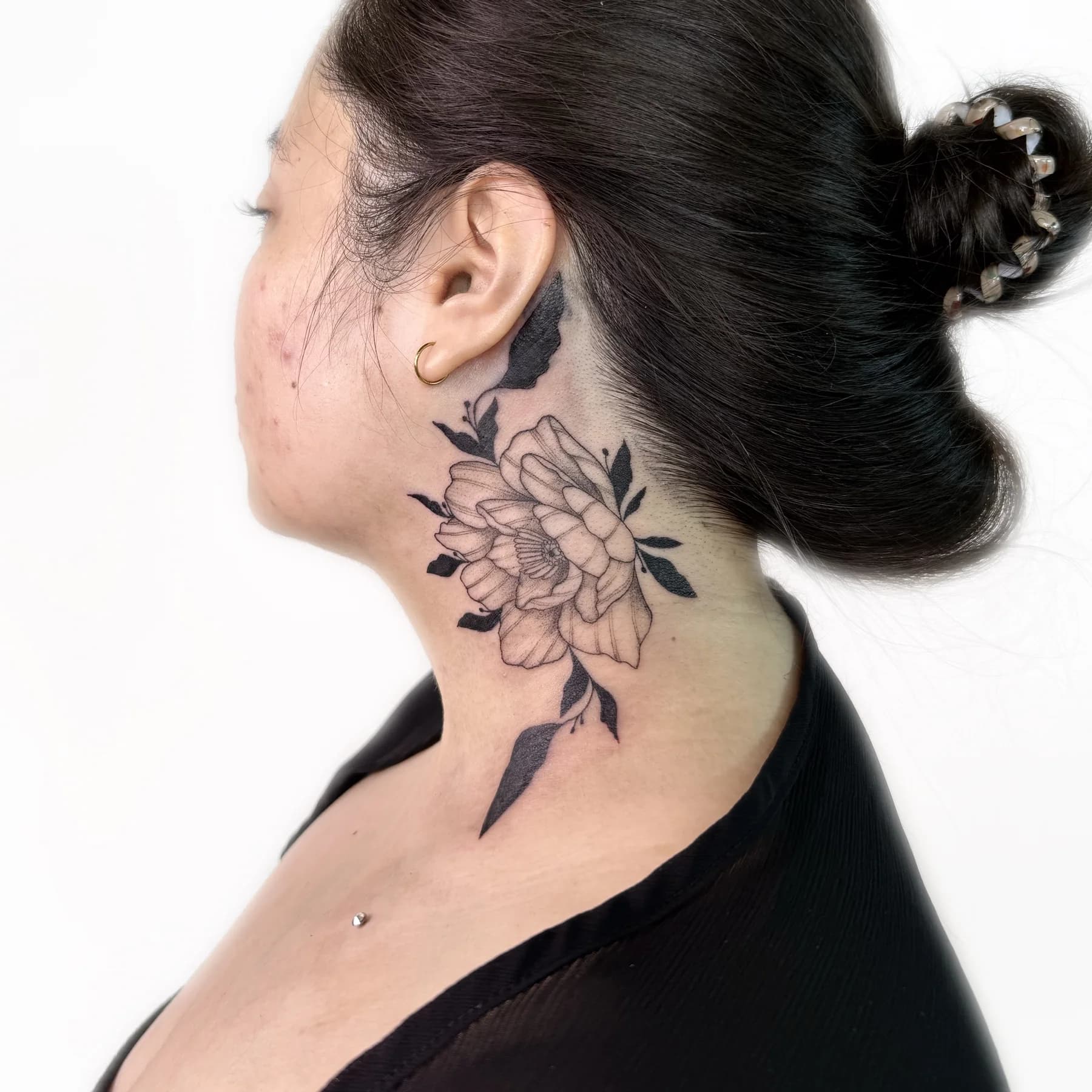
Botanical softness with black contrast
Soft gothic
Yes. Gothic does not have to mean harsh, masculine or heavily saturated. A tattoo can feel dark and refined while still using florals, delicate linework, open skin and graceful body flow.
This is where botanical gothic works especially well. Organic shapes soften the structure, while black leaves, pointed petals and ornamental framing keep the tattoo from becoming too gentle or generic.
Petals, leaves and vines can soften sharp architecture while still keeping a darker mood.
Negative space makes the tattoo feel airy and helps delicate details remain visible.
Fine jewelry-like details can create drama without making the piece overly heavy.
Healing and longevity
Gothic tattoos can age beautifully when the design respects the limits of skin. The biggest factors are line spacing, size, negative space, black balance, placement and aftercare.
Fresh photos show the immediate detail. Healed photos show whether the linework still reads clearly after the tattoo has settled, which is why both are useful when planning detailed work.
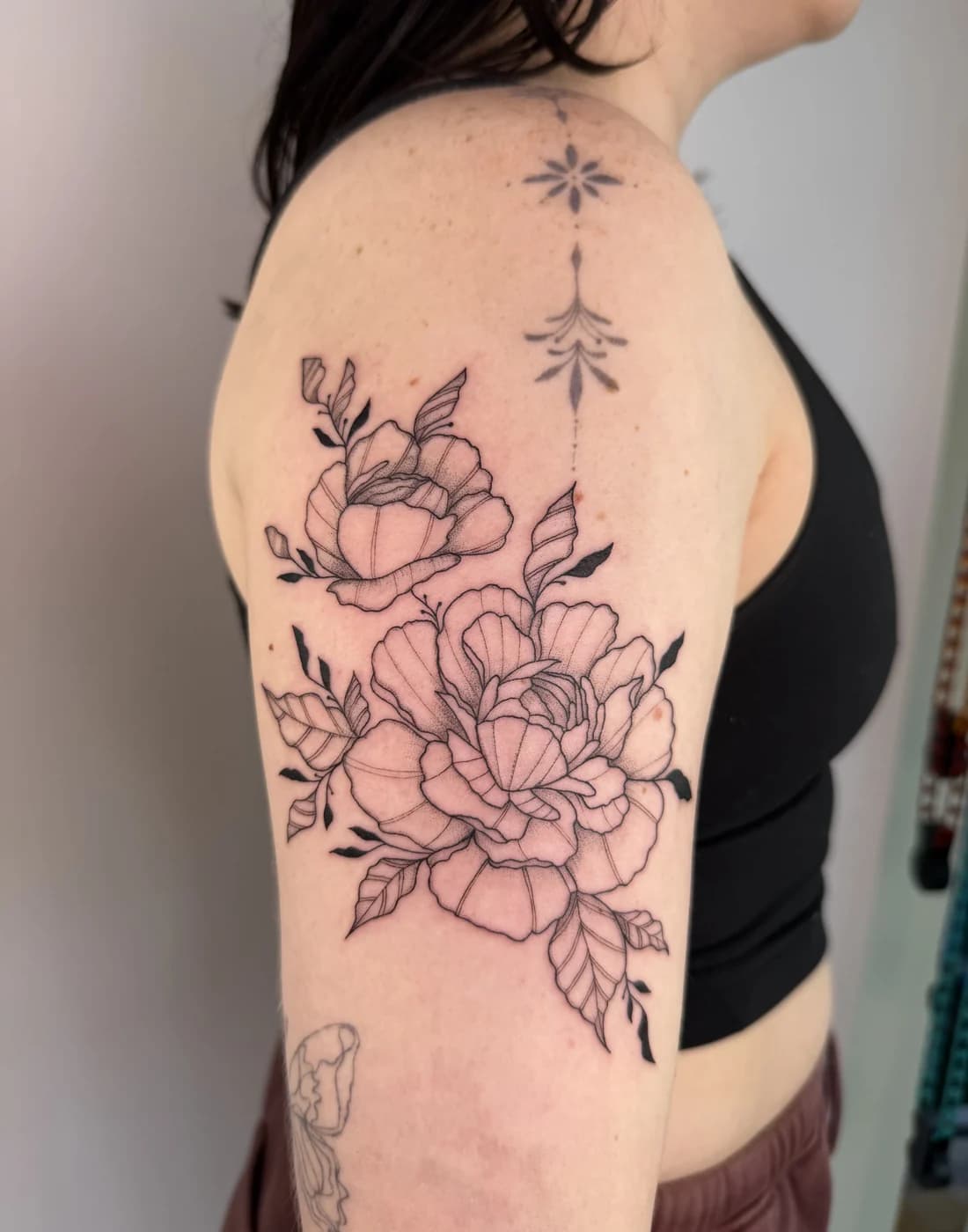
Fresh linework detail
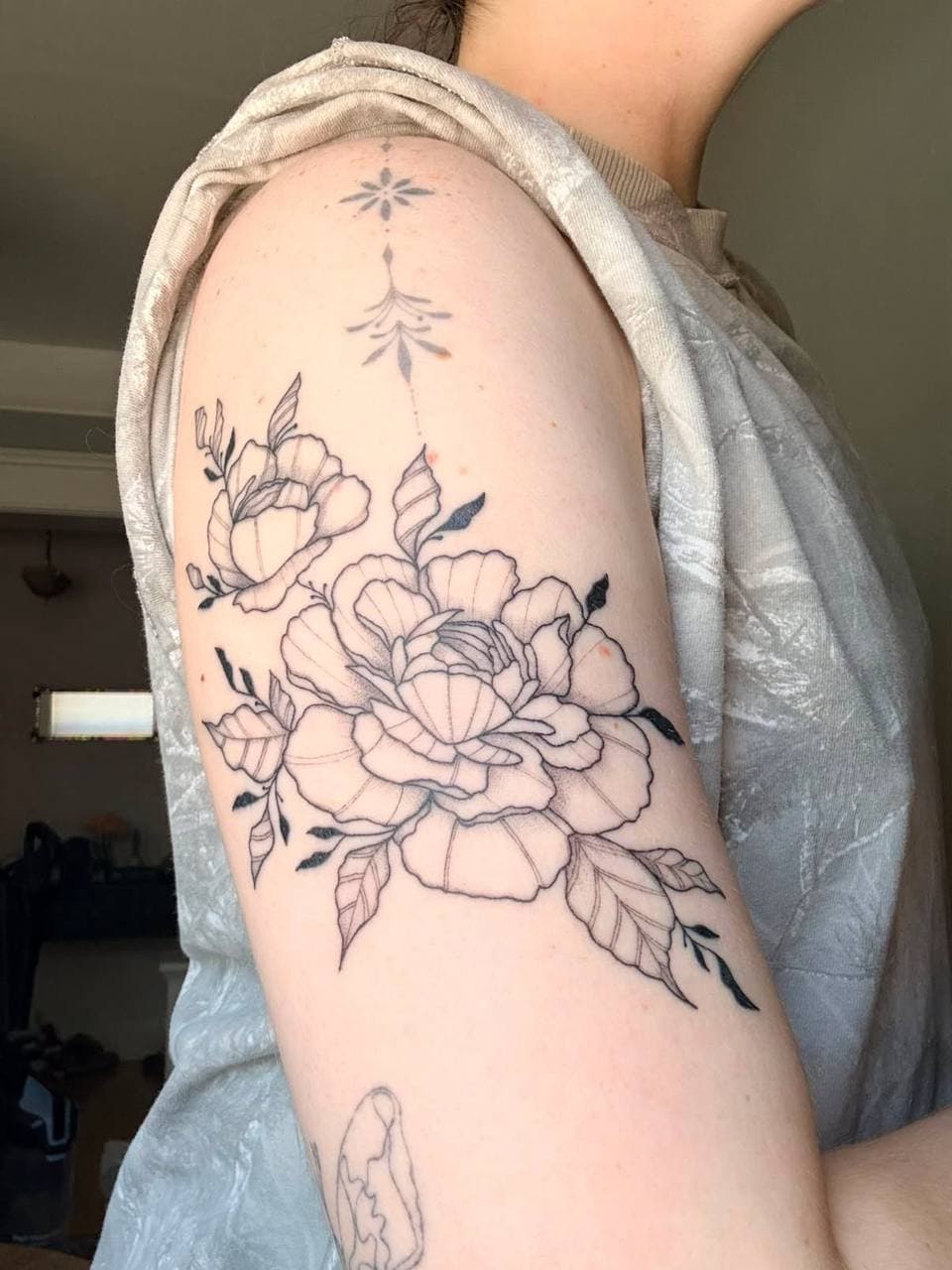
Healed fine line work
| Factor | Why it matters |
|---|---|
| Line spacing | Fine lines soften over time, so spacing helps prevent detail from closing up. |
| Scale | More room allows architecture, faces and ornaments to stay readable. |
| Black balance | Selective black gives contrast, while open areas keep the design clear. |
| Placement | Areas with more friction or movement may need simpler, stronger design choices. |
| Aftercare | Care during healing and sun protection afterward help the tattoo settle cleanly. |
Longevity checklist
Decision guide
Gothic can be a good direction if you want a tattoo that feels atmospheric, structured and personal without necessarily being visually heavy.
GOTHIC MAY BE A FIT IF
Planning note
Show the mood, imagery and direction you are drawn to.
The final design should be adjusted to your placement and anatomy.
Some ideas work better larger or with simplified detail.
FAQ
Short answers for planning gothic, architectural, ornamental and fine line tattoo projects in Seattle.
Yes, but small gothic tattoos need simplification. A tiny design can still feel gothic through silhouette, symmetry, sharp shapes, black accents or a clear symbol, but it usually cannot hold dense architecture or tiny ornamental detail.
No. Black fill can create strong contrast, but gothic tattoos can also be lighter and more open. Line weight, negative space, shape and ornament can carry the mood without making every piece heavy.
Yes. Florals, flowing placement, delicate ornament and open skin can make a gothic tattoo feel soft while still keeping the darker, more architectural atmosphere.
Yes. Architecture and florals often work well together because structure gives the piece shape and botanicals add movement. The balance depends on placement, scale and how much detail the tattoo can realistically hold.
They work especially well on placements that support shape: spine, sternum, ribs, thigh, forearm, shoulder and back. The best placement depends on whether the design needs length, width, symmetry or flow.
They can age well when the scale, spacing, black contrast and level of detail are planned carefully. Very small or overcrowded gothic tattoos are more likely to lose readability over time.
That depends on size, placement and the type of detail. Larger placements can hold architecture, ornament, portraiture and layered symbolism. Smaller pieces usually need fewer details and stronger shapes.
Yes. Multiple references can be helpful for explaining mood, subject matter and direction. They are used as guidance for a custom design rather than copied directly.
Booking
Share the placement, size range, references and body photos so the composition can be designed around your anatomy from the start.
Book a Custom Tattoo